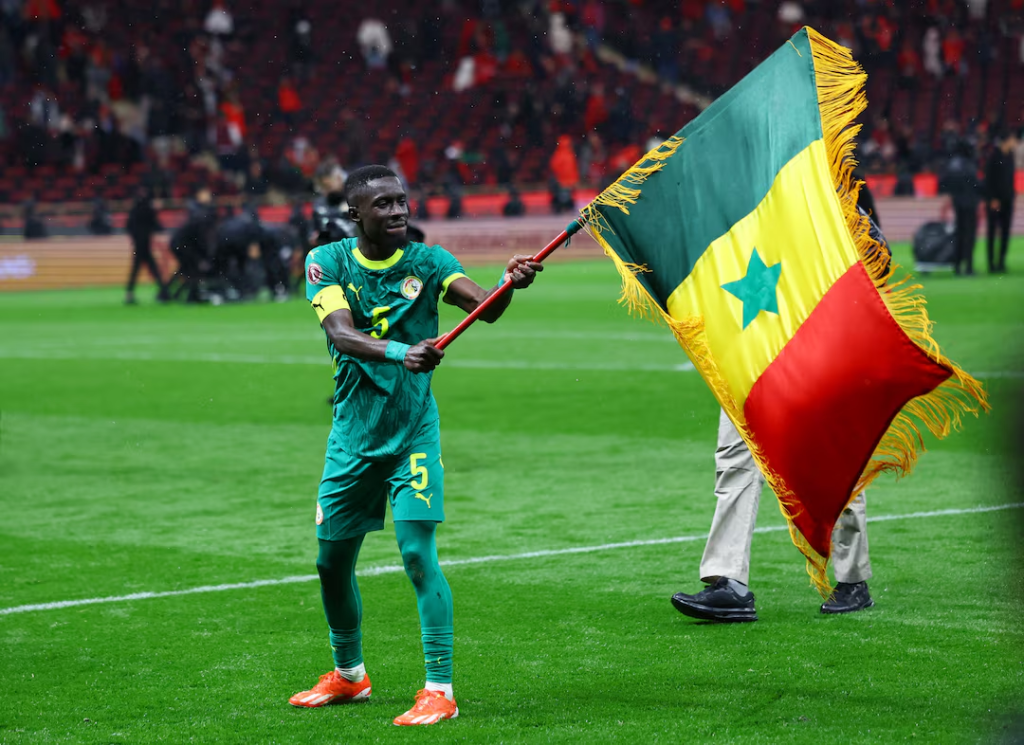
A historic night of drama, passion, and triumph. In front of an electrifying crowd in Rabat, Senegal successfully took down hosts Morocco in a thrilling and close 1-0 encounter. The match went to extra time after a myriad of turmoil, intensity, and unwavering resolve. But the Teranga lions didn’t reach the final result without being marred by altercations. Sadio Mane, Senegal’s international superstar, urged the national team to return after they left the field in protest of a contentious penalty call. However, Moroccan Brahim Diaz’s fairytale AFCON ended in heartbreak with a disappointing panenka miss, sending the game to extra time where Senegal’s Pape Gueye clinched it for the west African nation.
For the hosts, this was their greatest opportunity since 1976 to bring a second AFCON title to the promising North African nation. With an incredible home support fueling their run, their task at hand was simple: end the 50 year drought in home soil. After the greatest world cup run by an African nation in Qatar, this tournament provided the finest chance to showcase their skills in their continent. Their opponents Senegal entered the final as powerhouses of the African footballing nations and an uphill battle to be crowned consecutive continental champions. In the run up to the final, Morocco progressed after knocking out tournament favorites Nigeria in a classic penalty shootout, with Yassine Bounou being their superstar to take them to the final in Rabat. Senegal also had a tough semi-final match up, beating fan favorites Egypt with global icons Mohammed Salah and Omar Marmoush leading the attack. In similar fashion to the final, Senegal won in the 78th minute thanks to a defying goal by Mane.
From the beginning whistle, both teams projected their intent to dismantle each other’s defenses. Morocco’s sharp and innovative football by their attacking trio of Brahim, Ezzalzouli, and El Khannous tested the Senegalese backline. Their young star Mamadou Sarr and the experienced Moussa Niakhate were able to fend off Moroccan charges and were able to gradually shift the tempo to the Teranga Lions. However, the hosts were seeming to be extremely dangerous on the break by utilizing their physicality in order to pressurize Senegal’s defense. Senegal themselves also generated a few opportunities with their quick pace and movement. However, both sides held firm, and neither team was able to make any progress as the first half went by. Both sides entered the break in search of the magical moment to push their nation over the line in the next defying 45 minutes.
The second half began in similar fashion to the first with neither being able to disassemble each other. The atmosphere in the stadium was shifting with each preposterous strike increasing the tension in the arena. However, as the night progressed, mayhem struck in the last moments in a way never seen before in footballing history. It all kicked off with the commotion when Ismaila Sarr headed the ball from a corner kick in stoppage time. Senegal believed that they clinched the title in the dying moments, only to realize that the goal was disallowed due to a minor infringement on Achraf Hakimi enraging the Senegalese camp.
After a lengthy VAR review of a foul on Brahim Diaz in the penalty box, the on-field referee Jean-Jacques Ndala awarded a penalty to the Atlas Lions. This decision was the final straw for a furious Senegal camp, who were outraged by the decision in the final minute of added time. Coach Pape Thiaw immediately ordered his players to head off the pitch in protest, shocking the entire stadium. After a 17 minute pause to the encounter, Mane encouraged his teammates to return to the pitch to complete the final for the fans attending and viewing the final. As this chaos was being sorted out, Morocco’s star Brahim Diaz patiently waited at the 12 yard spot with the ball, tantalizing about this one shot that could alter the history of the North African side. However, up against the experienced Eduoard Mendy, Diaz’s lengthy wait proved costly as the overthinking of this penalty resulted in a poor panenka. Mendy kept his composure and dived slowly to the right, easily collecting the ball. Senegalese fans erupted into pandemonium, elated by the lifeline provided by their shot-stopper. With this save, the final entered into its final 30 minutes, extra time.
In the last 30 minutes of this unimaginable final, it was evident that Morocco was distraught by the penalty miss, especially their talisman Brahim. In the early minutes of extra time, the Teranga Lions roared after their capitalization of unlikely circumstances and seized the moment to make it 1-0. The attack was astonishing with midfielder Pape Gueye shooting an elegant and sophisticated shot curling into the top right corner from the edge of the box. The positioning and power was incredible with Yassine Bounou rooted to the ground, unable to save Gueye’s shot. The midfielder’s goal was the decisive one, with Senegal winning the title after 26 minutes of holding onto their lead. In the dying moments, the Senegalese team was presented with another opportunity but they failed to capitalize on their chance from close range. Nevertheless, the Senegalese bench erupted into elation after the final whistle, overcoming controversial calls going against them throughout the final.
However, as Senegal clinched the title and the accolade of African champions confirmed, the final itself did not escape controversy either. The discord throughout the match did not go without its share of condemnation from the media, officials, and fans alike. In the aftermath of the final, the Confederation of African Football (CAF) has since taken disciplinary measures against the parties involved in the altercations. Senegal’s manager Pape Thiaw was slapped with a five match suspension and a financial penalty for his hot headed actions to remove the team from the pitch in injury time. Several Senegalese players such as the Premier League attackers Iliman Ndiaye and Ismaila Sarr were banned for their unsportsmanlike behavior in the match. The Senegal federation has also since been fined for misconduct by their players and fans. The Moroccan federation also faced the same punishment with CAF also imposing financial penalties for several players and the federation as a whole.
The AFCON final not only served as a tournament for the continent but also provided a glimpse into the football frenzy atmosphere in Africa for the whole world. The sheer unpredictability of the match also was a critical factor towards the chaos at the end, with the win predictor swinging both ways constantly deep into stoppage time and the added 30 minutes afterwards. Even though the pain from this final will remain in Moroccan hearts for years, they must be proud of the team’s performance. This majestic run to the final cemented their status as a powerhouse in North Africa and globally, with the next ambitions for the Atlas Lions being to push beyond the boundaries set in Qatar and in their home territory. The passion of the nation for the sport was evident and the dramas and fairytales of this tournament were electrified with the Moroccan atmosphere. Overall, this monumental AFCON showcased the beauty of African football and the development of the sport all across the continent, cementing the fact that Africa hosts a plethora of talents waiting to burst through and an energetic fanbase supporting not just their nations but the entirety of the African Footballing world.
Image Source: https://www.reuters.com/sports/soccer/farcical-scenes-cup-nations-final-2026-01-18/
 DiliTimes
Leave a comment